


Training for Care has a range of Moving and Handling courses on offer, helping you to ensure a safe working environment for you, your clients and your employees.
We have an enthusiastic moving and handling training team who are all registered health care professionals, experienced in current Moving and Handling Safe Practice.
If you would like some professional advice, our Moving and Handling Course Director will be happy to help.
Please select from the COURSES menu for full details of content, duration and fees. If you wish to book onto one of our open courses, dates are listed below. Or, if you are looking to arrange a training session on a date of your choice, please select a course and go to the group booking section.
If you are not sure that any of these courses will suit your training needs, please contact us to discuss your requirements.
Open Course Dates
We regularly run moving and handling courses on our year-round Open Course Programme at our venue in Edinburgh. You can book online by clicking on the links below.
| Moving and Handling with Hoist Training | 8th May 2024 | 10:00 am - 3:00 pm |
| Moving and Handling with Hoist Training | 10th June 2024 | 10:00 am - 3:00 pm |
Working with Children courses
Moving and handling is a key part of the working day for most childcare employees and carers. Training for Care has developed 2 courses specifically to meet the training need of the childcare 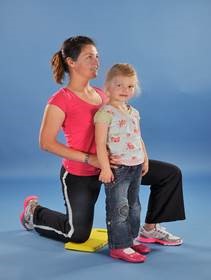 sector.
Our Moving and Handling – Working with Children courses are for all those who work with or provide support to babies, children and young people.
Course Director
Norma Findlay B.Sc. (Hons) Occupational Therapy; member of the Health and Care Professions Council and Posture and Mobility Group. Norma has been a practising occupational therapist for sixteen years, specialising in working with people who have complex physical needs. She currently works part-time as a community occupational therapist/manual handling facilitator in addition to her freelance work as an OT quantification reporter and expert witness in personal injury cases. Her previous positions include Moving and Handling Development Officer for City of Edinburgh Council, Children and Families Department, and she holds the Centaur train the trainer IOSH accredited manual handling trainer qualification.
Guidelines and Statutory Requirements
Regulation 4 places duties on employers to:
avoid, so far as is reasonably possible, the risk of injury to employees which could result from the manual handling of loads
assess all manual handling operations which involve a risk of injury
reduce the risk of injury arising from any such operations to the lowest reasonably practicable level
inform and instruct employees in understanding manual handling risks and establishing safe systems of work.
Regulation 5 requires employees to comply with any system of work put in place by the employer to reduce the risk of injury when carrying out manual handling operations.
Guidance on Training Standards from the Chartered Society of Physiotherapy
The society has recommended for some time that 6 participants to 1 trainer is the maximum for safety when undertaking the practical components of manual handling training. This is to ensure that the trainer can be fully aware of all that is happening in the class and intervene as appropriate. Any number above this could be putting participants at risk of damage, and the trainer and those employing them at risk of litigation. (November 2000).
Training for Care’s Moving and Handling Training Team are all health care professionals (chartered physiotherapists, occupational therapists or nurses) and are experienced in modern approaches to manual handling. TfC’s position is that sound moving and handling training can only be provided by people who are suitably qualified and experienced to be able to respond accurately to the variety of questions and conditions which course participants are likely to present.
All moving and handling courses incorporate a problem solving approach to minimising risks for client and carer.
Scottish Manual Handling Passport Scheme, 2014 (SMHPS)
SMHPS 2014 was developed using the NHS Scotland Manual Handling Training Passport and Information Scheme, Version 1, March 2011. It is based on a partnership initially formed between the All Wales NHS Manual Handling Steering Group and the Health and Safety Executive.
The overall aim of The Scottish Manual Handling Passport is to ensure consistency of manual handling education across Local Authorities (LAs) and NHS Health Boards in Scotland, thus allowing employees to transfer their skills when moving within participating organisations by assisting in the standardisation of skills and knowledge throughout LAs and the NHS in Scotland.
Whilst the SMHP was developed with NHS Scotland and Scottish LAs in mind, it represents a peer reviewed consensus opinion of the current minimum standard, which could equally be applicable in other organisations. These include the private and voluntary health and social care sectors and the Further / Higher Education sector, the latter in their role in preparing the future health / social care workforce. Other organisations are encouraged to participate in the SMHP to extend the consistency of manual handling skills and knowledge across Scotland.
Scottish Manual Handling Passport 2014
Training is only part of following the passport.
Training for Care’s Manual Handling Courses aim to meet the following foundation curriculum.
Manual Handling Education, Foundation Curriculum and Assessment
Module A – Theory
Module B – Inanimate Loads
Module C – Chair Manoeuvres
Module D – Bed Manoeuvres
Module E – Hoisting
Training for Care’s Manual Handling Courses
Moving and Handling Awareness – Includes Module A, B and C
Moving and Handling – Includes Module A, B, C and D
Moving and Handling with Hoist Training – Includes Module A, B, C, D and E
Moving and Handling of Inanimate Loads – Includes Module A and B
Health: Important Notice
Participants are required to carry out the practical components of the course for successful completion, and therefore need to be fit (i.e. fit to work, no acute injuries). They will be asked to fill out a health questionnaire at the start of the course and, if they have any concerns, should report these to the course tutor. If organisations have concerns regarding potential participants, please contact TfC prior to booking.
Certification
TfC attendance certificate for moving and handling training courses to meet statutory requirements for risk reduction.
Moving and Handling Equipment at Training for Care
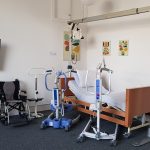
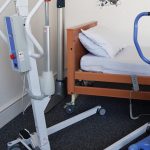 Oxford Midi Electric
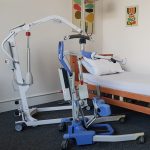 Roma Profiling Bed
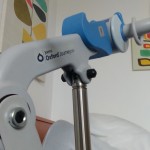 Oxford Journey Stand aid
Moving and Handling Equipment supplied by W Munro Rehab Ltd
The best training I had in my life. The best trainer you could possibly hope for. 10/10
Moving and Handling with Hoist
Enjoyed training class, lovely friendly people, Barnes was [a] brilliant trainer
Moving and Handling with Hoist
This training was very informative and practical and it was very well presented. thanks
Moving and Handling with Hoist
Everything is well explained & demonstrated properly, l was impressed with the training.
Moving and Handling with Hoist
The training went well…Barnes did a perfect job to train us fully in knowing how to use the machines.it was a good presentation.well informative.
Moving and Handling with Hoist